
London weather can be kind to exterior painting, but only if you choose the right work window. Temperature, rainfall risk, humidity, wind and daylight all affect how well masonry paint, exterior wood primer, gloss, stain and metal paint cure. This month-by-month exterior painting calendar explains when to book decorating work, what to avoid and how to plan around typical London conditions.
As a rule, most exterior paints perform best when surfaces are dry, the air temperature is comfortably above 10°C, and rain is not expected during preparation, application or early curing. In London, that usually makes late spring through early autumn the prime season, with preparation and smaller sheltered jobs possible at other times of year.
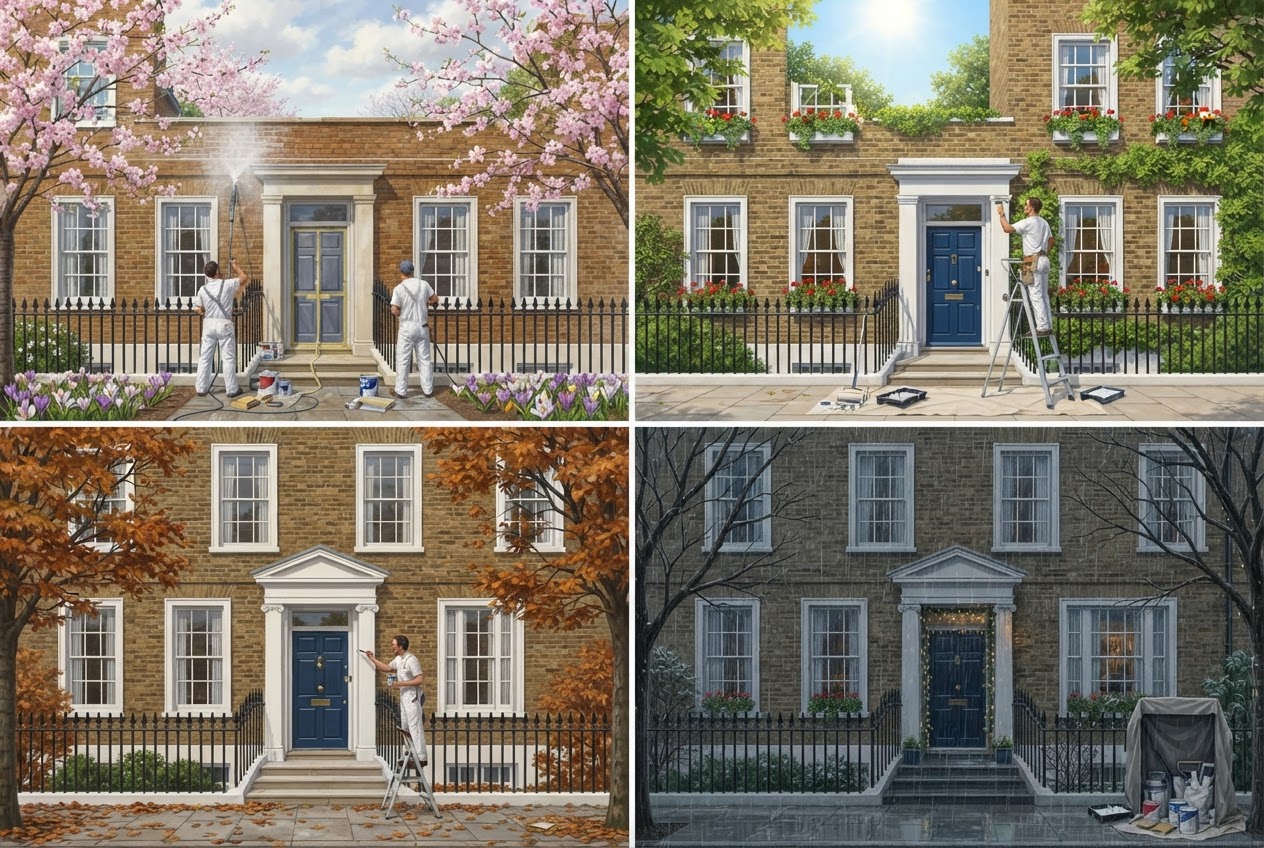
Quick answer: the best months for exterior painting in London
The most reliable exterior painting window in London is usually May to September. April and October can also work well for selected projects, especially sheltered woodwork and masonry, provided surfaces are dry and the forecast is settled. November to March is more limited because lower temperatures, short days, damp surfaces and slower drying times increase the risk of poor adhesion, streaking, blistering or delayed curing.
| Month | Typical suitability | Sensible exterior work |
|---|---|---|
| January | Poor | Inspections, quotes, emergency touch-ups only |
| February | Poor to limited | Repairs and sheltered preparation on dry days |
| March | Limited to fair | Preparation, primers, small sheltered areas |
| April | Fair to good | Woodwork, metalwork, masonry in settled spells |
| May | Good | Prime exterior decorating window begins |
| June | Excellent | Masonry, render, windows, doors and full elevations |
| July | Excellent | Large exterior projects with sun-management |
| August | Good to excellent | Full exterior painting, maintenance coats |
| September | Good | Last strong month for larger projects |
| October | Fair | Smaller jobs and protected areas |
| November | Limited | Repairs, cleaning, minor sheltered work |
| December | Poor | Planning, surveys and urgent weatherproofing |
January: cold, damp and short days
January is rarely a sensible month for planned exterior painting in London. Low temperatures, heavy overnight condensation and limited daylight make drying unpredictable. Even if the afternoon feels workable, surfaces may still be damp from the morning, and paint can remain vulnerable as temperatures fall again late in the day.
Best use of the month: exterior inspections, written quotes, colour planning, access checks and urgent patch repairs where weatherproofing is essential.
February: preparation if the forecast is settled
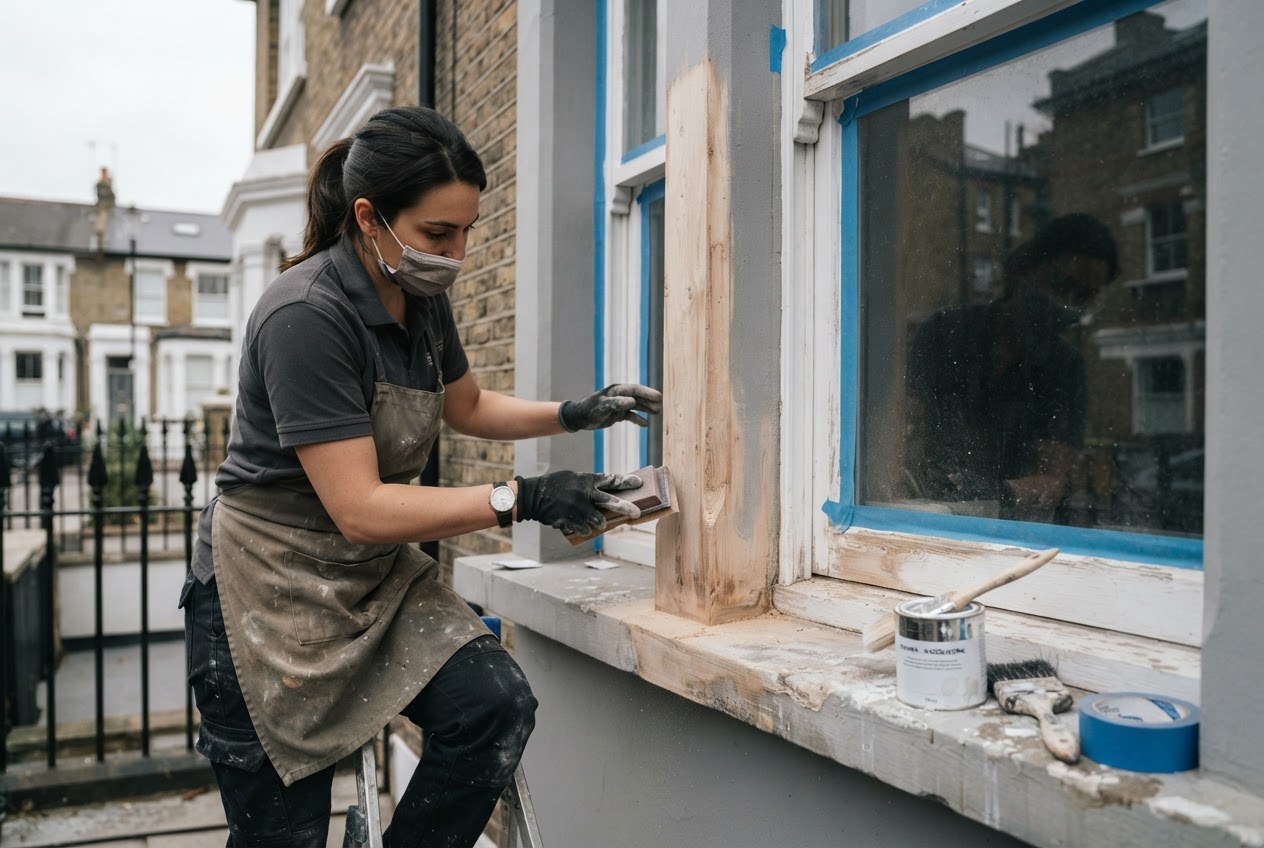
February remains risky for full exterior decorating, but there can be short dry spells suitable for preparation. Scraping loose paint, checking rotten timber, filling cracks and cleaning algae from masonry can move a project forward before the main season begins.
Work window: late morning to mid-afternoon on dry, mild days. Avoid painting if frost, drizzle or overnight condensation is likely.
March: the start of cautious exterior work
March can bring brighter days and longer working hours, but London surfaces often remain cold and damp. Sheltered areas may be ready for primers and undercoats if the forecast is dry and temperatures stay within the product guidance. Exposed elevations are still best assessed carefully.
Sensible jobs: sanding, filling, stabilising flaky masonry, priming bare timber and completing sample patches.
April: a useful month, but watch showers
April is often when exterior painting enquiries increase. Daylight improves and temperatures are more promising, but showers can interrupt work. The key is flexibility: prepare when conditions are marginal and apply coatings during dry, stable windows.
Best projects: exterior doors, window frames, railings, gates, fences and smaller masonry sections that can be completed between weather changes.
May: one of London’s best exterior painting months
May is usually one of the strongest months for exterior decorating in London. Temperatures are more paint-friendly, daylight is generous and surfaces dry faster after light rain. It is an excellent time for repainting render, masonry, timber windows, fascia boards and front doors.
Planning tip: book early. Professional exterior decorators often fill their May and June schedules quickly because these months offer a strong balance of temperature, daylight and manageable rainfall risk.
June: prime time for full exterior decorating
June offers long days and generally favourable drying conditions. It is ideal for full elevations, multi-day masonry projects and detailed woodwork. The longer daylight window also helps decorators plan sanding, repairs, priming and top coats without rushing drying times.
Watch out for: painting in direct hot sun. If paint dries too quickly on a sun-baked surface, it can affect flow, finish and adhesion. A professional decorator will often work around the sun, starting on shaded elevations and moving as conditions change.
July: excellent, with heat management
July is another excellent month for exterior painting, but warmer spells can create their own problems. Very hot walls, metalwork or south-facing timber can cause paint to skin over too fast. Good planning matters: avoid peak sun, follow product temperature limits and allow proper drying between coats.
Best work window: early morning through late afternoon, adjusting by elevation. Shaded walls and cooler sides of the property are often tackled first.
August: strong conditions, but plan around holidays
August normally remains a strong exterior painting month. It is particularly useful for completing larger home improvement projects before autumn. However, decorator availability, supplier lead times and household holidays can all affect scheduling, so it pays to book in advance.
Sensible jobs: full house exteriors, garden-facing elevations, rendered walls, masonry repainting, fences, gates and exterior trims.
September: the final dependable month for larger projects
September is often an excellent time to paint outside in London. Temperatures are usually comfortable, surfaces are less likely to be overheated and daylight is still workable. It can be a smart choice for homeowners who missed the early summer rush.
Timing tip: start larger projects earlier in the month where possible. By late September, evenings cool down more quickly and drying time becomes more important.
October: possible, but choose smaller work windows
October can still work for exterior decorating, especially on sheltered walls, doors and timber details. The challenge is shorter days, cooler nights and a higher chance of damp surfaces. The safe approach is to be selective and avoid starting a large, exposed project without a settled forecast.
Good candidates: front doors, minor masonry repairs, touch-ups, sheltered window frames and protective maintenance coats.
November: mostly preparation and protection
November is usually too damp and dark for reliable planned exterior painting. Even when rain is not falling, surfaces may not dry properly. Paint applied in marginal conditions can fail early, which costs more to correct than delaying the work.
Best use of the month: cleaning, checking gutters, identifying cracks, sealing urgent gaps and planning spring work.
December: avoid planned exterior painting
December is the least practical month for exterior painting in London. Cold surfaces, short daylight, rain and seasonal disruption make it difficult to achieve a durable finish. Unless a temporary protective repair is needed, it is usually better to wait.
What conditions should be checked before exterior painting?
- Surface dryness: masonry, timber and metal must be dry enough for the chosen product.
- Temperature: check both daytime and overnight temperatures, not just the warmest part of the day.
- Rain forecast: allow time for preparation, application and early curing before rain arrives.
- Direct sunlight: avoid applying paint to overheated surfaces.
- Wind: strong wind can affect ladder safety, spray drift, dust and the finish.
- Product guidance: different primers, masonry paints, stains and gloss systems have different limits.
London exterior painting calendar: practical takeaway
For most London homes and commercial properties, the best exterior painting plan is to survey and prepare in early spring, complete major decorating between May and September, and use October for smaller final jobs. Winter is best reserved for planning, repairs and urgent protection rather than full repainting.
If you are planning exterior painting in London, LGC Decorators can help assess the condition of your surfaces, recommend suitable coatings and schedule the work for a realistic weather window. A well-timed project gives your property a sharper finish and helps the paint system last longer.
Frequently asked questions
What is the best month to paint outside in London?
June and July are usually excellent months because of longer daylight and warmer temperatures, but May and September can be just as practical and sometimes easier to schedule.
Can exterior painting be done in winter?
Winter exterior painting is possible only in limited circumstances, such as urgent sheltered repairs with suitable products. For full exterior repainting, it is normally better to wait for warmer, drier conditions.
How long does exterior paint need before rain?
It depends on the product, surface and weather, but decorators should always allow enough dry time before rainfall. Always follow the paint manufacturer’s guidance and allow extra margin when temperatures are cool or humidity is high.
Is spring or autumn better for exterior painting?
Late spring is usually more reliable than autumn because daylight is increasing and surfaces dry more readily. Early autumn can still be very good, especially September, but the usable working day shortens quickly.


